— Materials & Construction Explainer
Carbon Fiber Seats
Materials, Benefits &
BMW OEM Options
Browse BMW-focused carbon seats alongside selected Ferrari 488, McLaren, Nissan GT-R, and universal carbon-seat listings. Product type, condition, price, photos, fitment, and package contents vary by item, so use each product page to verify the details before ordering.
6–12 lbs
Typical Seat Weight
60–80 lbs
Saved Per Pair vs Stock
Varies
Certification by Listing
Check Fit
Vehicle-Specific Fitment
What Are Carbon Fiber Seats?
Carbon Fiber Shell
A single-piece structural shell replaces the traditional steel frame and foam bun. The woven carbon fiber layup is resin-infused and autoclaved for maximum strength-to-weight ratio.
Minimal Padding
A thin foam layer or none at all is bonded directly to the shell. This enables the tight lateral bolstering that keeps the driver planted during aggressive cornering without excess bulk.
OEM Integration
Factory BMW carbon seats integrate seat heating, side airbag modules, seat sensors, and occupancy detection — all in a shell that weighs a fraction of the stock seat.
Carbon fiber — a polymer matrix composite reinforced with woven carbon filaments — was first used in motorsport in the early 1980s. Today it appears in everything from F1 monocoques to production BMW M competition seats. The critical property is specific stiffness: carbon fiber is roughly five times stiffer than steel at one-quarter the weight, which is why a seat shell that could stop a 16G impact can weigh under 8 lbs.
BMW's own M Performance division began offering carbon fiber bucket seats as factory options on M3 and M4 models in the F-series generation, and continued into the current G-series. These seats are engineered alongside the car — airbag placement, seat sensor logic, and ISOFIX anchors are all accounted for. That factory integration is why genuine OEM carbon seats command a significant price premium over generic racing buckets.
The Real Performance Benefits
Weight reduction is the headline benefit, but it's far from the only reason serious BMW owners upgrade to carbon fiber seats. Here's what actually changes when you make the switch:
- Unsprung Weight Reduction
Seats sit above the center of mass. Removing 60–80 lbs at seat height lowers the effective polar moment of inertia, reducing the tendency to roll during direction changes. On a track BMW, the difference is felt immediately as sharper turn-in response.
- Lateral Support
Stock BMW seats have adjustable bolsters that expand and contract. Carbon bucket seats have fixed, sculpted bolsters that hold the driver firmly without any lateral movement under cornering loads. This eliminates the sensation of sliding in the seat and allows full concentration on driving.
- Improved Pedal Feel & Sensitivity
A planted, supported seating position means the driver uses less core energy fighting seat movement. This translates directly to more consistent and sensitive pedal inputs — especially important for trail-braking and heel-toe techniques.
- Heat Resistance
Carbon fiber does not conduct heat the way metal frames do, and the minimal padding avoids the "cooking" sensation that stock leather seats can produce during long track sessions. BMW M carbon seats are typically rated for ambient temperatures up to 80°C without structural change.
- Aesthetics & Interior Premium
A glossy carbon weave backrest is unmistakably motorsport-derived. The visual effect inside an M car is dramatic — particularly in combination with an Alcantara steering wheel, carbon trim, and exposed carbon dashboard elements.
Types of Carbon Fiber Seats
| Type | Weight | Airbag | Street Legal | Best For |
|---|---|---|---|---|
| BMW OEM M Carbon | 8–11 lbs | Yes | Yes | Street + Track |
| Aftermarket Sport | 12–18 lbs | Varies | Varies | Street / Light track |
| FIA Race Bucket | 6–9 lbs | No | No* | Track only |
| Carbon-Kevlar Hybrid | 9–14 lbs | Varies | Varies | Track / Rally |
*Track-only FIA seats are not street legal on U.S. public roads due to airbag deletion.
Why OEM BMW Carbon Seats Outperform Aftermarket
The performance seat market is crowded with brands selling carbon-look or carbon-shell seats at every price point. Understanding why genuine BMW OEM carbon fiber seats represent a different product category entirely helps justify the investment.
BMW engineers the M competition seat as part of the complete vehicle restraint system. The seat frame, side airbag module, belt pre-tensioner anchor, and seat occupancy sensor all communicate with the same airbag control module that governs the entire supplemental restraint system. A seat that doesn't integrate correctly can trigger fault codes, suppress airbag deployment, or cause the DSC/stability control system to misread occupancy data.
Beyond electrical integration, OEM seats undergo the same crash testing and compliance programs as every other safety system on the car. The carbon fiber shell specification, resin system, and layup are validated against FMVSS 207 (seating systems) and FMVSS 208 (occupant crash protection) — the same standards that govern factory seat production. Generic aftermarket carbon shells typically self-certify or omit regulatory validation entirely.
At ApexCarbon, every seat we sell is a genuine BMW AG part — not a replica, not a "OEM-style" copy. The parts were manufactured by BMW suppliers under BMW quality control, and carry the original BMW part number on the frame.
Selected Carbon-Fiber Seat Listings
View All →Examples include Pista-style Ferrari 488, Senna-style McLaren and Nissan GT-R, and a universal Podium-style seat. Confirm the exact application and package details on each listing.
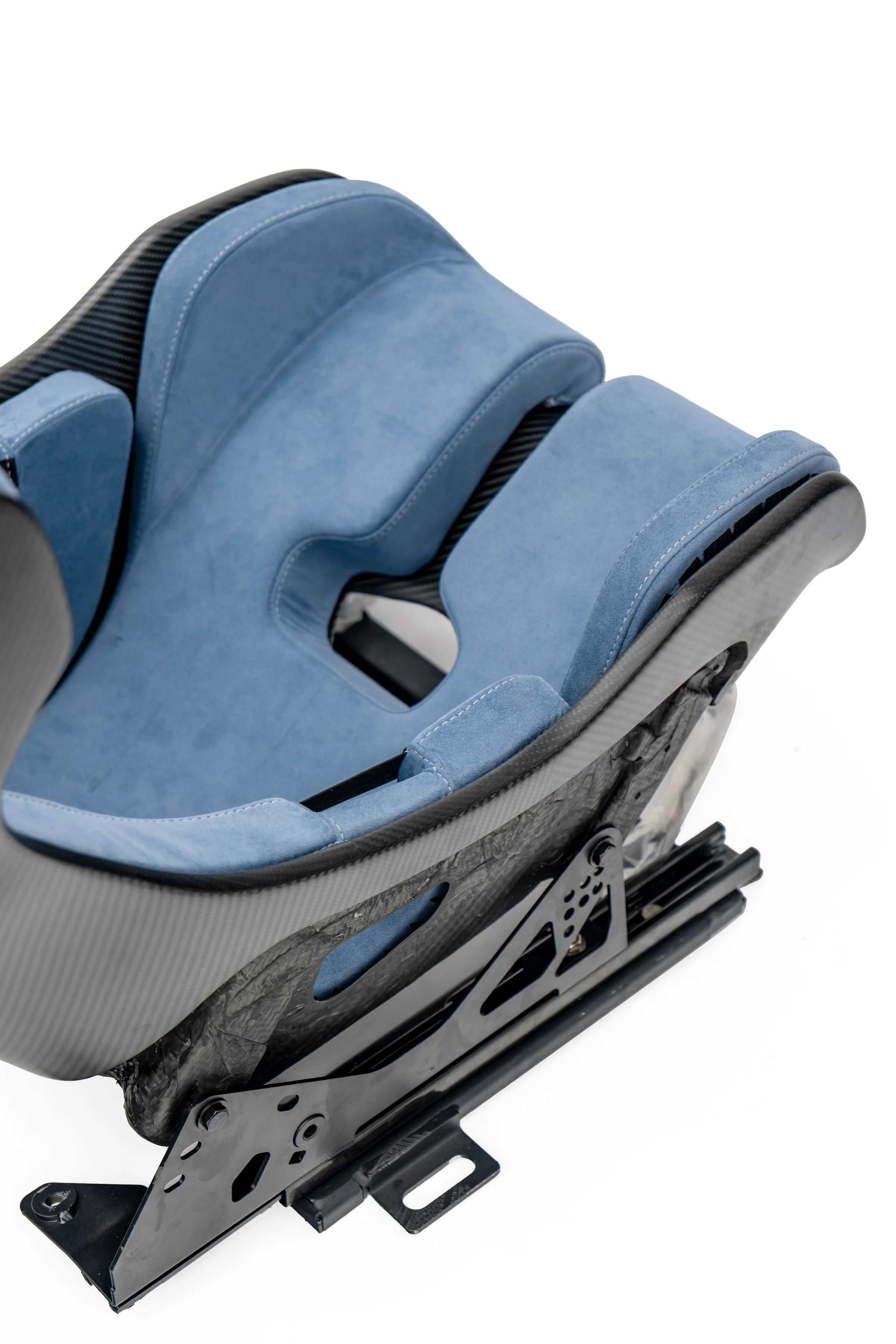
Fits: McLaren fitment not verified — confirm model, year, rails, and hardware
CMST Tuning Senna-Style Dry Prepreg Carbon Fiber Seat for McLaren
$3,500.00
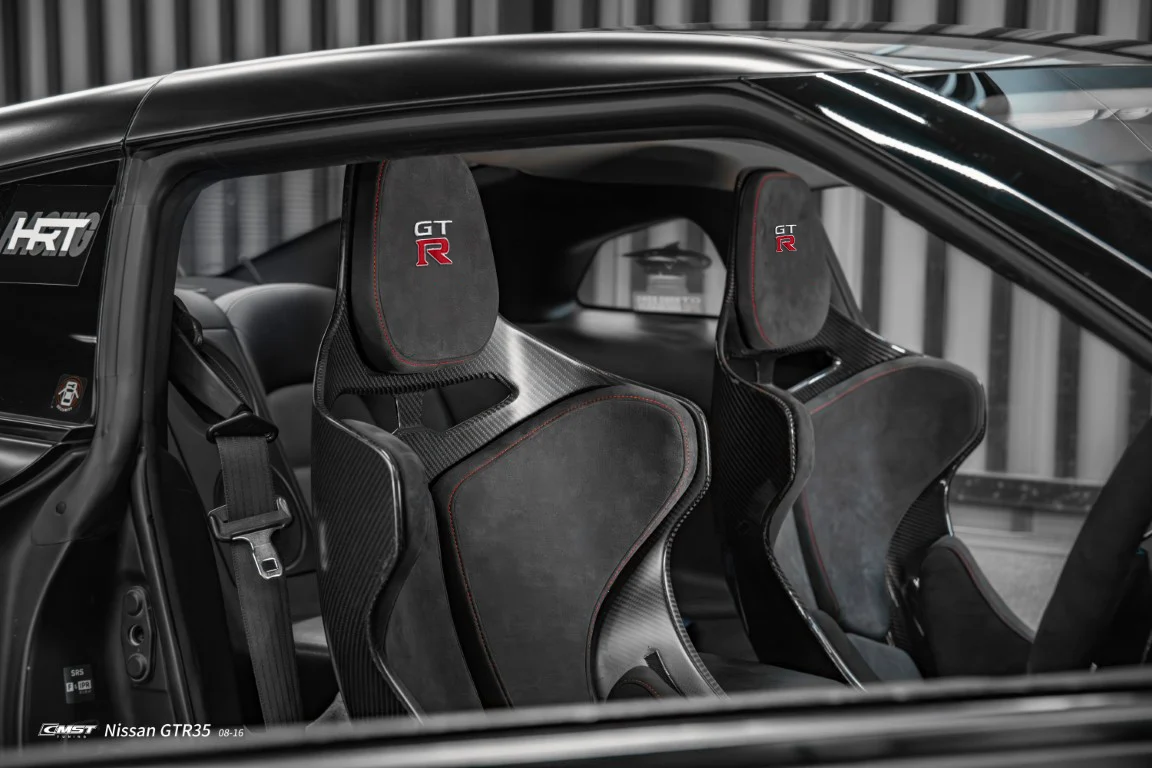
Fits: Nissan GT-R R35 CBA / DBA / EBA (seller-stated 2008–2024; confirm exact year)
CMST Tuning Senna-Style Dry Prepreg Carbon Fiber Seat for Nissan GT-R R35
$3,200.00
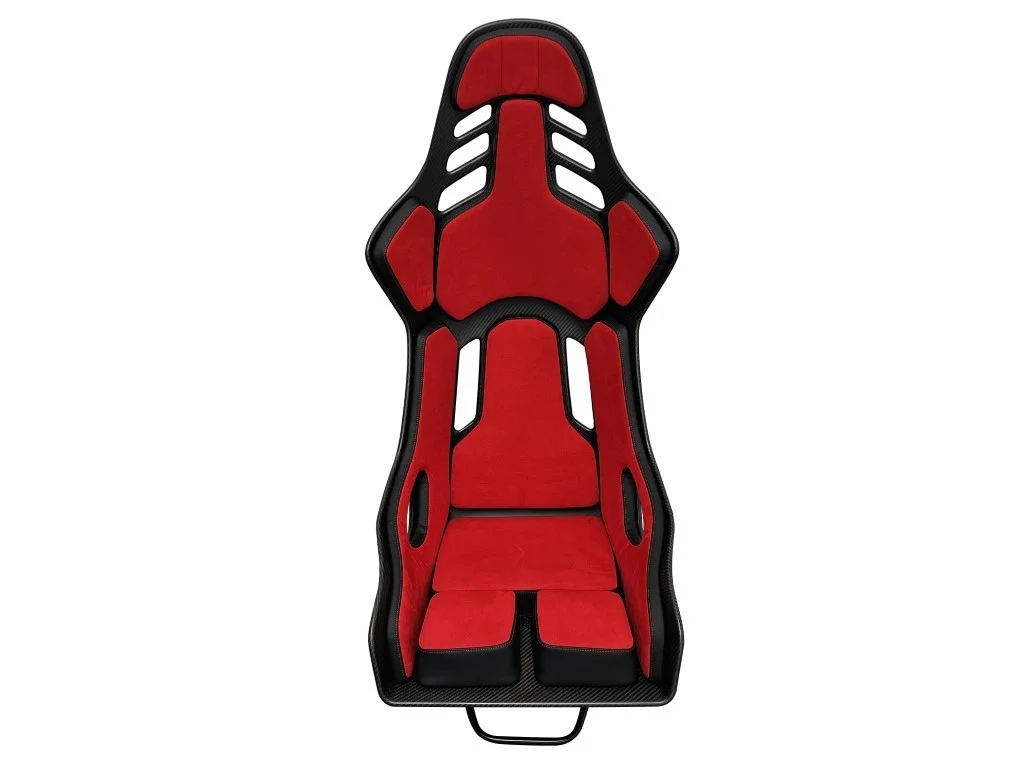
Fits: Universal-style fitment — verify mount pattern and vehicle compatibility before ordering
Aero Republic Recaro Podium-Style Dry Prepreg Carbon Fiber Universal Racing Seat
$1,800.00
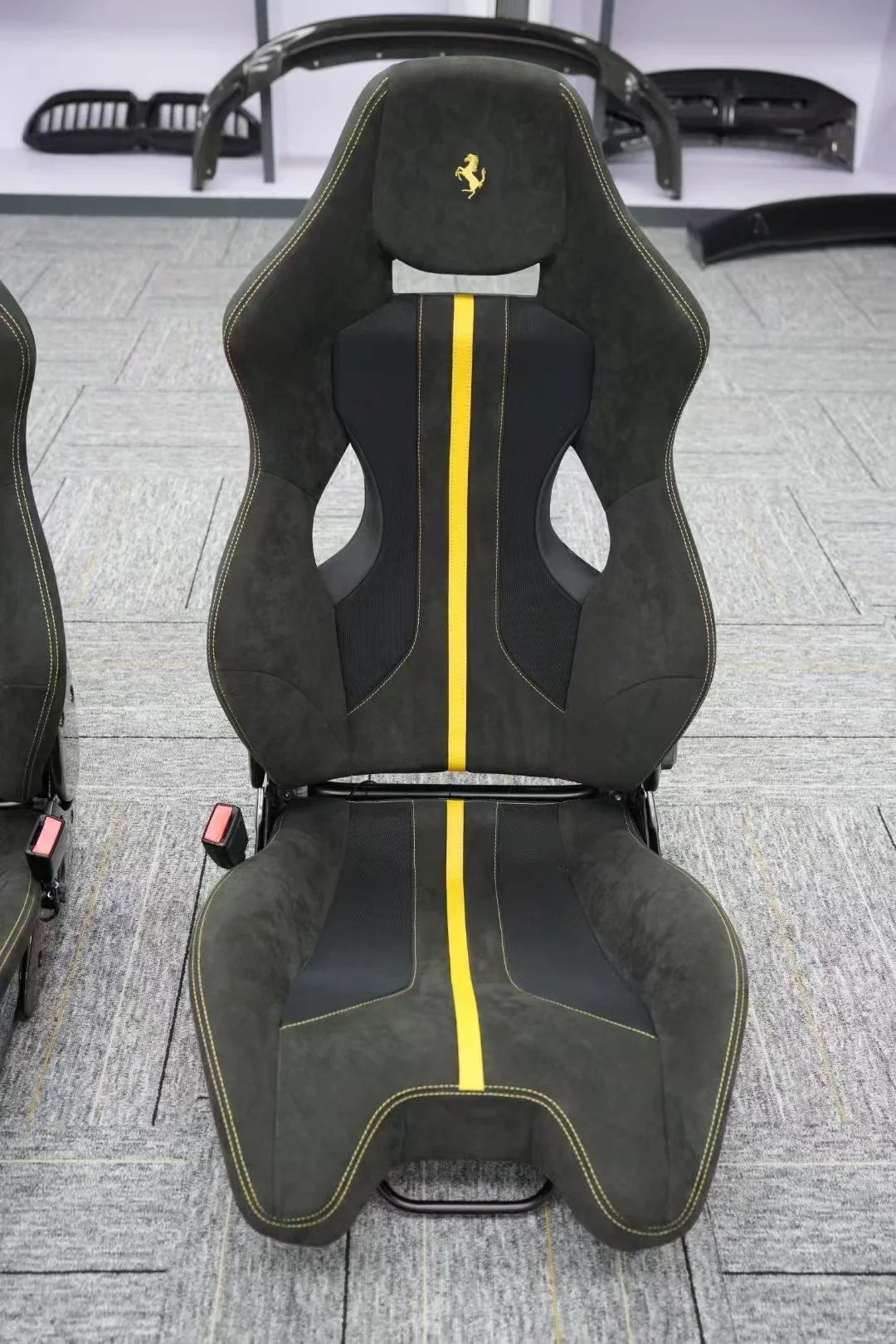
Fits: Ferrari 488 GTB / Spider (2016–2020; verify exact model and hardware)
Aero Republic 1:1 Pista-Style Dry Prepreg Carbon Fiber Seat for Ferrari 488
$9,200.00
Frequently Asked Questions
How much do carbon fiber seats weigh?
A full carbon fiber bucket seat typically weighs between 6 and 12 lbs (2.7–5.4 kg), compared to 40–60 lbs for a stock OEM heated leather seat with airbag modules. BMW M OEM carbon shells average around 8–10 lbs per seat, saving roughly 60–80 lbs from a pair — a meaningful performance gain on a track car.
Are these seats road-legal and airbag-compatible?
That depends on the specific seat, vehicle, installation, and local regulations. Do not assume that an aftermarket-style seat retains factory airbags, sensors, or other restraint features. Verify compatibility with the manufacturer and a qualified installer before using a seat on public roads.
Do carbon fiber seats need a racing harness?
BMW OEM carbon fiber competition seats are designed to work with the factory 3-point seatbelt. Many feature additional harness pass-through holes for a 4- or 6-point harness when used on track. Always use a harness bar or certified roll cage attachment point with a multi-point harness — never route harnesses through stock belt anchor points.
How are carbon fiber seats different from Alcantara or leather seats?
Standard BMW leather and Alcantara seats have a foam cushion layer on a steel or aluminum frame, with leather or Alcantara surfaces. Carbon fiber competition seats replace the entire foam-and-frame assembly with a single-piece carbon fiber shell lined with minimal padding — giving extreme rigidity, lateral support, and dramatic weight savings at the cost of everyday comfort.
Can I install carbon fiber seats myself?
BMW OEM carbon fiber seats may bolt to factory seat rail mounting points when the exact seat, chassis, rails, and hardware match. Aftermarket and track applications may require additional rails, wiring or hardware. We strongly recommend having a qualified shop perform the SRS inspection after installation.
What is the difference between a carbon fiber shell and a full carbon seat?
A "carbon fiber shell" uses carbon fiber for the structural backrest and seat pan but may use traditional foam and leather padding. A "full carbon" seat typically means the outer visible surface is also carbon — showing the woven carbon weave pattern on the outside of the backrest. BMW M Competition seats feature a full glossy carbon backrest with a Merino leather or Alcantara seating surface.
Do BMW carbon fiber seats fit all BMW models?
No — BMW M carbon fiber bucket seats are model-specific. Seat rails and side airbag modules are engineered for each chassis. An M4 G82 seat will not directly bolt into an E90 M3 without aftermarket rail adapters. Each listing on our site specifies exact compatible chassis codes (e.g. G82, G80, G87) to eliminate guesswork.
Are the carbon-fiber seats new or used?
Condition is listing-specific. Check the product page for the stated condition and photos; if condition is not specified, contact us before ordering rather than assuming the item is new or used.
Do you ship carbon fiber seats internationally?
Yes. We ship throughout the United States and internationally from Houston, TX. Seats are protected for specialist automotive freight. Costs, delivery times, customs duties, and import taxes vary by destination, so contact us for a quote before ordering.
Will an aftermarket seat keep my factory safety features?
Not necessarily. Airbags, occupancy sensors, seat-belt pretensioners, and wiring vary by seat and vehicle. Confirm the exact product configuration and have a qualified installer check compatibility before purchase or installation.
Do you list carbon-fiber seats for cars besides BMW?
Yes. Current listings include an Aero Republic Pista-style seat for Ferrari 488 GTB/Spider, CMST Tuning Senna-style seats for McLaren and Nissan GT-R R35, and an Aero Republic universal Podium-style seat. These are separate aftermarket-style listings, not BMW OEM seats; confirm the exact fitment, package quantity, and included mounting parts on each product page.
Do carbon-fiber seat listings include rails and mounting hardware?
Package contents vary by product. Check the listing’s “Includes” details for seat quantity, rails, brackets, wiring, and other hardware. Contact us with the product link before ordering if a required part is not specified.
Related Guides
Ready to Upgrade to Carbon?
Browse available BMW OEM and clearly labeled carbon-seat options, with US and international shipping available.
Shop All Seats